How to create a shop bot in Telegram? (A real guide from scratch to automated sales)
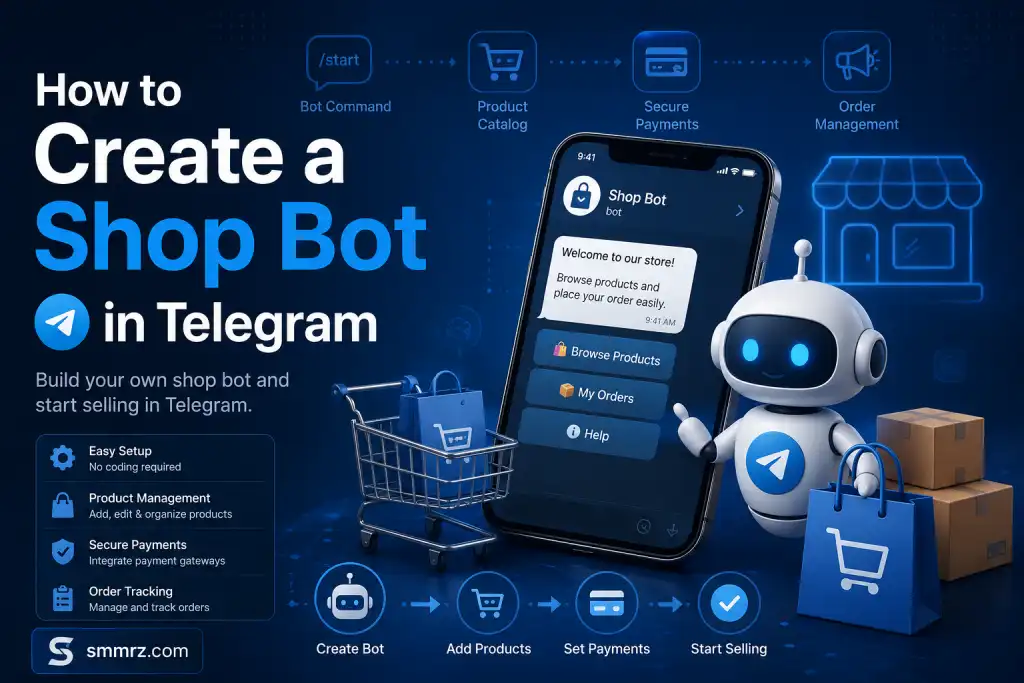
When I first decided to automate sales in Telegram, I thought that creating a shop bot meant just a few buttons and connecting to a payment gateway. But the truth is that if you design the structure incorrectly, even the best bot will not make you sales.
What I learned along the way was that a “shop bot” is more of a sales system than a technical tool. If you look at it this way, the result is completely different.
In this article, I will show you exactly the same path that I took; from creating the first bot to the point where sales became completely automated.
Getting Started: Make This Decision Before Building a Bot
The biggest mistake I made when I first started was jumping into building a bot without a plan. I spent a few days building a bot, but it was never used.
The problem was that my sales model was unclear.
You need to determine what you are going to sell from the very beginning, because this decision affects the entire structure of the bot. Selling files, selling services, or selling physical products, each has a different path.
For example, when I focused on selling SMM services, I realized that the most important thing for me was fast connection to the API and instant delivery of the service, not the complicated design of the bot's appearance. This change of perspective made my entire path change.
Creating a bot via BotFather (but with one important tip)
To get started, you need to use the Telegram bot and go to BotFather inside it.
Creating a bot is very simple on the surface. You give a command, choose a name and finally receive a token. But the point that many do not pay attention to is that this token is actually the key to full access to your bot.
I did not take this seriously at first and once lost access to my bot due to a mistake in storing the token. If I were to give one important piece of advice, it is to store the token like a bank account password.
Designing the Purchase Path; Where Sales Are Made or Broken
Most people who build bots focus on features, not on user experience. I made the same mistake.
At first, my bot was full of different options; too many categories, long descriptions, complicated paths. The result? The user was confused and did not buy.
After a few tests, I simplified the entire structure. The user entered the bot, quickly reached the product, made a selection, and paid. That's it.
This simplicity led to a significant increase in conversion rates.
If I had to sum up my experience in one sentence: every additional click means one less customer.
Connecting to a payment gateway; the critical point
Until you have automated payments, your store is basically half-done.
I used to use the card-to-card method at first. It may seem simple, but managing orders was a nightmare. The user would send a receipt, I had to check it, manually confirm it… it literally took me a long time.
When I connected the payment gateway, everything changed. The user would pay and the system would do the rest.
If your target market is Iran, intermediary gateways are usually the best choice. If you are working on an international market, you should go for global payment methods or cryptocurrencies.
Connecting to the API; Where Real Automated Sales Begins
This was the most important part that transformed my business.
When I connected the bot to the SMM panel API, I didn’t have to do anything manually. The user placed an order, the payment was made, and the service was automatically sent.
Before this step, I had sales, but they were limited. After connecting to the API, sales became scalable.
If you are also working in the field of services such as members, views, or followers, this part is vital for you.
Features That Really Matter (Not Just Cool)
Along the way, I added a lot of features to the bot, but they didn’t all have the same impact.
What really made a difference in sales were things like the user’s wallet, order status display, and quick response. On the other hand, some features just cluttered the bot’s appearance without adding any real value.
Here again, the principle of simplicity wins.
Testing, Error, and Optimization; The Step You Shouldn’t Skip
No bot is perfect from the start. Mine wasn’t either.
I went through the buying process myself several times, had my friends test it, and even observed the behavior of real users. Each time, I found a small flaw that affected sales.
This step may be tedious, but it’s exactly what turns a regular bot into a vending machine.
Summary from real experience
If I were to start from scratch today, my path would be much shorter. Because I know what to focus on.
First, I define the sales model, then I create a simple bot, quickly connect it to the payment gateway, and finally connect it to the API. The rest will become important in the next step.
The truth is that success in Telegram sales does not depend on the tool, it depends on a correct understanding of the sales process.
The bot is just an intermediary; it is the user experience design that makes money